How can AI be leveraged to streamline and improve patent litigation across the full lifecycle of a patent.
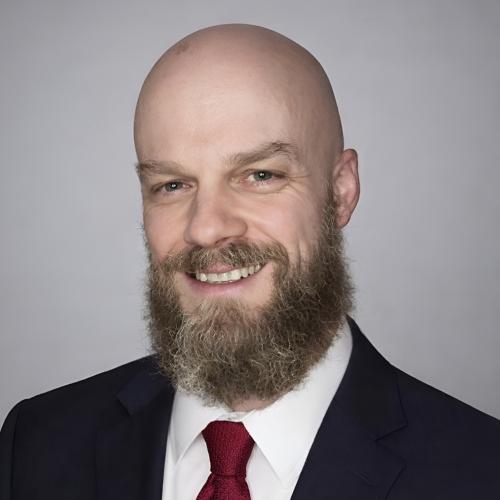
Andrew Riley
Senior Legal Engineer & IP Counsel
Patlytics
How can AI be leveraged to streamline and improve patent litigation across the full lifecycle of a patent.
First enacted in 1979, and the basis of all modern US Trade Secret legal regulations, including the establishment of the DTSA, in August 2026 the Uniform Law Commission’s Drafting Committee’s will meet to discuss potential updates to the Uniform Trade Secrets Act (UTSA). Originally drafted to resolve inconsistencies in the treatment of trade secrets across state lines, there has since been debate as to whether the act still meets its original intentions. Proposed reforms aim to address this through key aspects of the statute, including reasonable measures, extraterritorial reach, damages, and the interaction between the UTSA and DTSA. This session will review recent changes to the UTSA, discuss ensuing strategy, and consider the effect on the DTSA, and how it may be adapted in response.

Ken Corsello is an IP Law Counsel at IBM. He currently focuses on drafting and negotiating patent licenses and assignment agreements. At IBM, he has worked on patent procurement, litigation, client counseling, product clearance, and IP transactional matters.
Before joining IBM, Ken was a law clerk to Chief Judge Glenn Archer at the Federal Circuit; an Associate Solicitor in the USPTO; and in private practice at law firms in Washington, D.C. He did his undergraduate work in Computer Science at SUNY Stony Brook, received his JD from the Catholic University, and obtained an LL.M. from George Washington University.
Ken has been the chair of IPO’s Trade Secrets Committee since 2016. His recent presentations on trade secret law include participating in a panel at the USPTO’s “Trending Issues in Trade Secrets: 2019” symposium and as a witness on behalf of IPO at the 2018 hearing on “Safeguarding Trade Secrets in the United States” held by the U.S. House Committee on the Judiciary, Subcommittee on Courts, Intellectual Property, and the Internet.





Charlotte Kufus is a co-founder at Flank, which builds supervised AI agents that handle high volume contracting workflows end-to-end. She is an LSE graduate and has been listed in Forbes 30 Under 30.

Brian counsels clients across the biotechnology, pharmaceutical, chemical, and engineering industries on complex intellectual property and technology disputes. He represents companies in high-stakes patent litigation involving biotechnology and biosynthesis, pharmaceuticals, plastics, telecommunications, and LED technologies, helping clients align legal strategies with scientific, regulatory, and business objectives.
Drawing on his background in pharmaceutical research and development, Brian represents clients in Hatch-Waxman litigation and has helped guide multiple matters through trial. He also advises those pharmaceutical clients on pre-suit strategy, product selection, portfolio management, formulation development, labeling considerations, and regulatory matters.
A significant portion of Brian’s practice focuses on biotechnology innovators, particularly those developing bioengineering and fermentation technologies. He has extensive experience litigating patents related to metabolic engineering and microbial strain development and is skilled at translating highly technical concepts into clear, compelling litigation and counseling strategies.
Before attending law school, Brian worked as a formulation development scientist at Caraco Pharmaceutical Laboratories and gained experience in pharmaceutical synthesis at Fabbrica Italiana Sintetici S.p.A., providing him with a practical understanding of the industries he serves.